

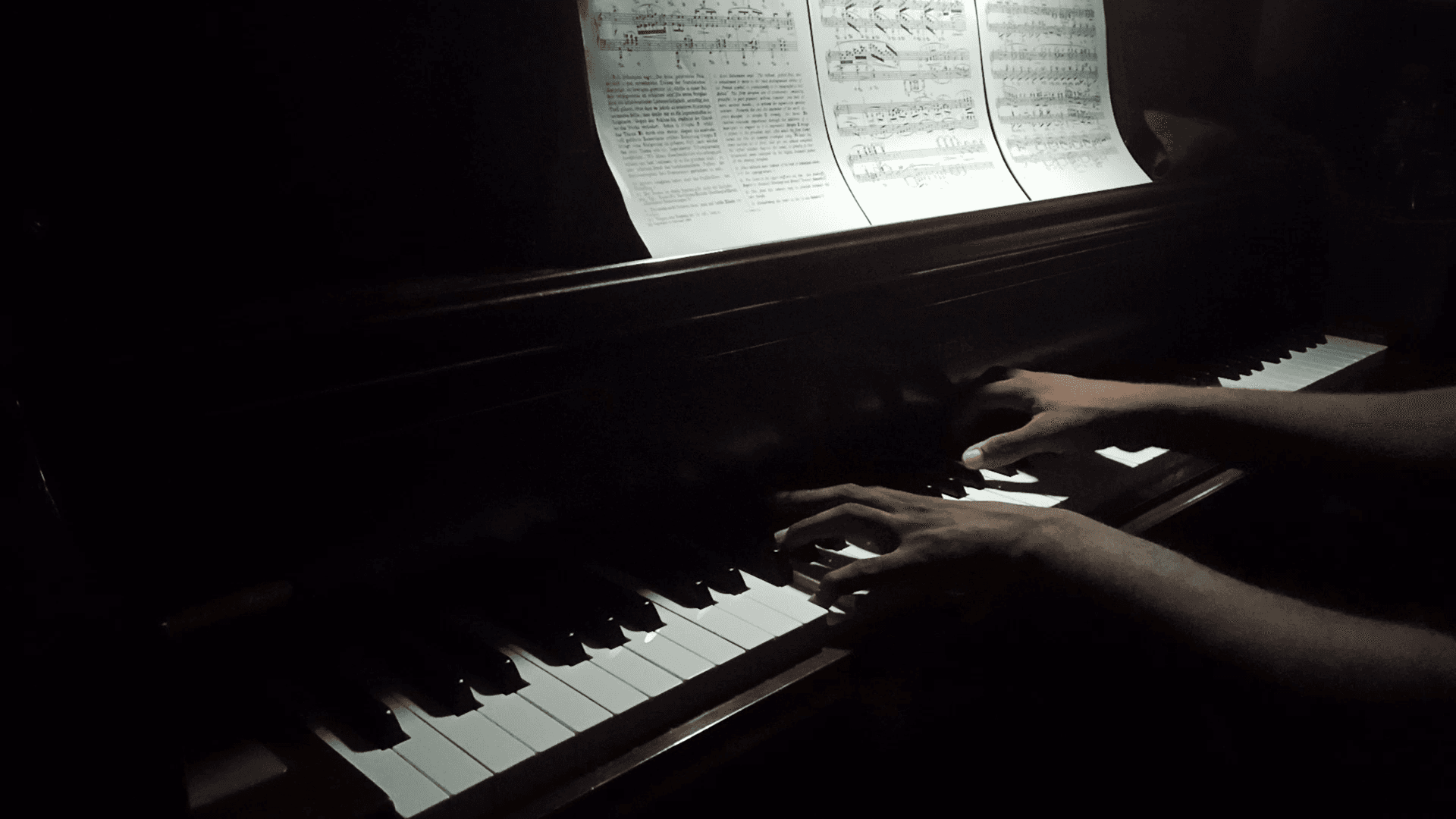
Digital pianos are touted as the ultimate replacement for the acoustic piano. And why not? After all, they are super portable, often very affordable, never need tuning, and have volume control and a headphone jack for late-night practice. But that is not the whole picture. Only the bright sides. Because for anyone shopping for a first instrument, whether for themselves or for a child, this will soon prove to be just marketing hype. The truth comes down to physics.
What "acoustic" actually means
For something to be acoustic, it must be self-resonating. It should be able to produce sound purely by mechanical means, without any electronics. On a real piano, a key moves a hammer, the hammer strikes the strings, and the strings drive the soundboard. Every part of the instrument vibrates and shapes the tone you hear.
A digital piano works in a completely different way. When you play a note, what you hear is a sound that was either sampled from a true acoustic piano or calculated by software to imitate one, then reproduced through the digital's onboard computer and speakers. The sound is no longer acoustically "pure." You are hearing a processed sound.
It is like looking at a picture of someone versus seeing them in person. The picture may be excellent, but it is not the person. Ask anyone who has been to a piano concert: the experience of hearing a piano live can never be matched by a video recording.
Why the picture is so easy to sell
So why does the "replacement" claim sound so convincing? Because the comparison is easy to stack in the digital's favor, and no dishonesty is needed.
A digital piano is sold by its feature list: number of sounds, number of notes it can play at once, recording, Bluetooth. These can all be counted and printed on a card. What makes an acoustic piano special, the response of the whole instrument under the player's hands, cannot be put on a spec sheet.
The showroom helps too. A digital is usually demonstrated through headphones or good speakers, playing its best sound. The buyer is hearing a polished version of an excellent piano. The acoustics nearby may be out of tune or simply not prepared as well.
Most first-time buyers are not pianists, so they cannot yet judge touch or tone. Price, size and convenience are what they can compare, and those are exactly the digital's strengths. The digital is also easier for the seller to stock and ship. It needs no tuning or regulation before it can be sold.
Finally, the acoustic's costs are visible and the digital's are not. Tuning and humidity control are real expenses that can be listed. What does not appear on the price tag is how long each instrument lasts. An acoustic is made of parts that can be repaired, reconditioned or replaced, so a good one can serve for decades. A digital depends on electronics, and once a model is discontinued, parts are often hard to find, so it may have to be bought again. Neither this nor what a player misses by never learning real touch control is easy to see at the time of purchase.
What I recommend
- If your budget and space allow, buy an acoustic piano, new or used. Have a qualified technician look at a used one before you buy.
- If you must start with a digital, choose one with fully weighted keys, not a lightweight keyboard.
- Plan on moving to an acoustic if you or your child continue to study seriously.
A digital piano can be a fine start. But a recording of a piano is never the piano itself.
Comments
0 commentsBe the first to comment.